
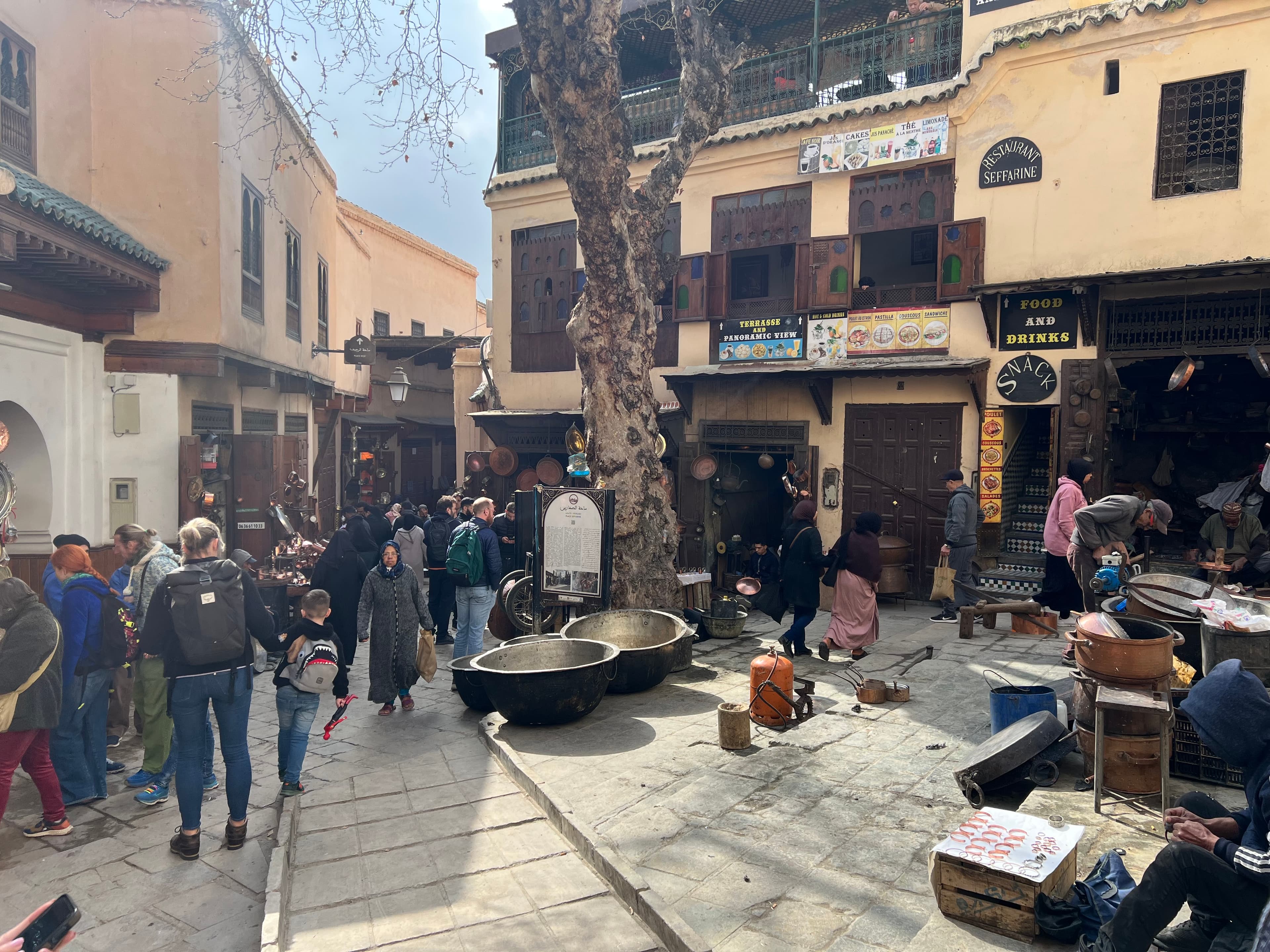
Fez has been the centre of Moroccan traditional craftsmanship for over a thousand years. The city's craftsmen — potters, leather workers, weavers, coppersmiths, and woodcarvers — still practice techniques passed down through generations, producing work of extraordinary quality in workshops that have changed little since the medieval period.
Fez Blue Pottery
The distinctive blue and white ceramics of Fez are recognised the world over. Produced in the potters' quarter near the Bab Chorfa gate, each piece is hand-thrown on a wheel, dried in the Moroccan sun, and then hand-painted by artisans trained from childhood in the intricate geometric and floral patterns that define the Fassi style. The cobalt blue pigment — once derived from cobalt oxide imported from distant mines — gives Fez ceramics their unmistakable depth of colour.
Leather Craftsmanship
The leather industry is Fez's oldest and most famous. Hides arrive at the Chouwara tanneries from across Morocco, where they are soaked in lime pits to remove hair, then transferred to the dye vats — filled with natural pigments including poppy petals (red), saffron (yellow), indigo (blue), and mint (green). After drying in the sun, the leather is worked by skilled artisans into babouche slippers, bags, belts, and jackets.
Weaving and Textiles
The medina's weaving district produces both utilitarian and decorative textiles of remarkable beauty. Traditional Fassi silk brocade — heavy fabric woven with geometric patterns in gold and silver thread — has been produced in Fez since the Merenid period. Handiras (Berber wedding blankets), striped wool djellabas, and fine cotton kaftans complete a textile tradition of great depth and variety.
Supporting the Craftsmen
When buying crafts in Fez, seek out individual workshops rather than large shops that aggregate products from many sources. Spending time watching a craftsman at work, learning the technique, and then purchasing directly supports the living tradition that makes Fez unique.